

Release of smart homes for seniors: intelligent home solutions for independent living
Monash University, 25 February 2021
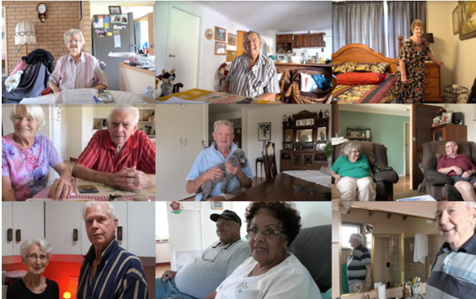
In a partnership with McLean Care and Deakin University, a team of Monash researchers from the ETLab have evaluated the benefits, opportunities and challenges of incorporating smart home devices into the homes and lives of older people living in regional communities.
From digital voice assistants to automated ‘smart’ lights and robotic vacuum cleaners, readily available off-the-shelf smart home devices can support the wellbeing and independence of older Australians, as identified by new research.
The research involved participant insights, electronic data from the devices showing participants’ usage patterns, user reviews and end-of-trial surveys.
From the findings, researchers were able to identify the usability challenges, expectations, as well as the hopes and anxieties older people have of smart home devices in assisting them to live more independently and to improve their overall wellbeing.
“Older people are a marginalised demographic when it comes to the design of smart home devices and are often underrepresented in user studies,” said Monash University Project Lead, Associate Professor in the Emerging Technologies Research Lab, Yolande Strengers.
“Despite the many benefits smart home devices can offer the elderly population, many older Australians are increasingly concerned about being left behind in the digital age, highlighting the need for proactive policy and research initiatives to help bridge this gap.”
As part of this study, the researchers identified a number of recommendations to equip older people and bridge the digital divide. These recommendations included offering smart home devices as optional extras for in-home services, providing opportunities for learning to gain digital living skills, providing affordable and reliable internet services, and designing and installing smart home devices that support older people’s independence, mobility and memory.
The Monash research team consisted of:
- Associate Professor Yolande Strengers – Monash Project Lead, Emerging Technology Research Lab, Monash University
- Professor Sarah Pink – Director, Emerging Technologies Research Lab, Monash University
- Dr Larissa Nicholls – Senior Research Fellow, Emerging Technology Research Lab, Monash University
- Dr Melisa Duque – Research Fellow, Emerging Technology Research Lab, Monash University
- Mr Rex Martin – Research Assistant, Emerging Technology Research Lab, Monash University
Learn more about the Smart Homes for Seniors project, or access the Final Report.
View the Media Release.
Learn more about the Smart Homes for Seniors (2021) film, directed by Sarah Pink.
Photography: Emerging Technologies Research Lab team. © Emerging Technologies Lab 2021
SMART DEVICE OVERVIEW
Google Home digital voice assistant – 81 Google Home devices were installed in all 23 homes. The Google Home suite of technologies installed included Google Home, Google Home Mini and the Google Nest Hub Max tablet installed with the Google Duo application (in 12 homes).
These devices provided:
- Voice-activated control of other smart home devices;
- Access to music, news, weather and other information; and
- A touch screen and voice-activated tablet for video calls (mediated with Google Duo app) and screensavers (via Nest Hub Max).
Aeotec smart lights – 58 Aeotec smart lights were installed in 22 homes. The smart lights consisted of:
Smart light bulbs (installed in existing lamps) Sensor-activated coloured lights to remind participants of other everyday activities (taking medication, opening garage doors). to light up rooms and pathways at night, controlled by voice activation (on Google Home), push buttons (placed near beds and chairs), sensors, fobs and/or tablets; and
Sensor-activated coloured lights to remind participants of other everyday activities (taking medication, opening garage doors).
Kogan smart kettle – 13 Kogan smart kettles were installed in 13 homes. The smart kettle provided hands-free, voice-activated control of the kettle.
Roomba robotic vacuum cleaner – 15 Roomba robotic vacuum cleaners were placed in 15 homes. The robotic vacuum provided a hands-free automated alternative to manual vacuuming and cleaning services provided by McLean Care. The Roomba vacuum was connected to Google Home, and activated by voice commands.
Other devices
A number of other devices were provided to some or all participants as part of the trial. These included:
- A standard network cabinet ‘black box’ installed in all participants’ homes;
- An Apple iPad tablet trialled by all participants and pre-installed with several applications relevant to that household (including Fibaro, Automation Bridge, Roomba, Sonos and Google Home);
- Sonos music speakers trialled in three homes (controlled by voice activation);
- Netamo weather stations trialled in two households providing location-specific weather information accessible via tablet or voice requests;
- Easy Read digital clocks trialled in four households providing the day of the week, date and time;
- Aeotec smart switches trialled in ten households and connected to existing appliances (e.g. pedestal fans) that could be controlled by smart buttons, voice activation, sensors and/or tablet;
- Fibaro flood sensors trialled in one household, located in the kitchen;
- Fibaro smart buttons installed in 23 homes to control smart lights and switches (e.g. pedestal fans);
- Fibaro key fob installed in ten homes as an additional control for the smart devices;
- Aeotec motion sensor installed at the front door of one home and connected to a smart light; and
- Remotec air-conditioner Infrared (IR) controller installed at five homes to connect air conditioners to Google Home.
Key benefits noted and some interesting findings (Summarized by Ward Tech Safety & Security Solutions):
Top “Positive Impacts of Devices on Health, Independence and Well-being” included:
- Positive impacts on well-being
- Smart light-enabled daily reminder for meds
- Being able to vacuum areas of the home (WW – What about risk of tripping over the Roomba?!)
- Enjoying Music or News from using voice commands with Google Home
- Enjoying relaxing, nature-oriented screensavers & music (from their Google Nest Hub Max)
- Impact on physical health and mobility
- Smart light buttons enabled them to create safely lit routes for walking around home at night.
- Robotic vacuum cleaner reduced need for physical labor.
- Google Home’s voice call function presented new options in accident & emergency situations
- Mental activity, learning, and purpose
- Google Home’s attempts to help with learning can be humorous and fun
- Social and technical interactions can support physical and mental well-being.
- Maintaining and supporting everyday routines
- Devices support daily routines (e.g. lights/colors for reminders and walking/bathroom in the evening)
- Daily routines improve with sensory & interactive experiences provided by the devices.
Some other key points noted by Ward Tech Safety & Security Solutions:
- Not directly noted in the study, but should be called out—
- Improved safety with smart lighting (both auto and ability to adjust remotely by family if needed) and water sensors minimizing risk of slipping, drowning, or flooding the house.
- Improved safety with Google Home’s voice call function for accidents and emergencies.
- Piece of mind for family members knowing these smart solutions improve safety of their loved ones and enhance controls for identifying when problems occur (as well as noticing problems quicker!)
- Some things the study didn’t do that could’ve been even more helpful—
- While smart water sensors were installed, the study didn’t mention adding any smart Smoke, Fire, or Carbon Monoxide detectors. (Or any other detectors or alerts for the elderly in their home and for family members or emergency services to be automatically alerted).
- Cameras not even mentioned as an option, although they certainly can significantly improve safety & security as well as allowing family members to monitor/view and be notified of any potential issues.
- Other smart devices could’ve been helpful such as smart door mats, bed shakers (alarm/alert), and fall detection devices.
Overall, we believe the study was helpful. However based on our other points noted above, it was focused more on how senior citizens would adjust and use Smart Home features rather than directly on safety & security. In our opinion, the overall outcome was as expected — The elderly participants liked the music, news and weather features as well as the light-based reminders. But they really missed out on the opportunity to test smart safety & security devices.